HYBRID LINK MCX
RESILIENT SPACE-TERRESTRIAL CONTINUITY FOR MISSION-CRITICAL COMMUNICATIONS IN CLIMATE DISASTER OPERATIONS

Introduction
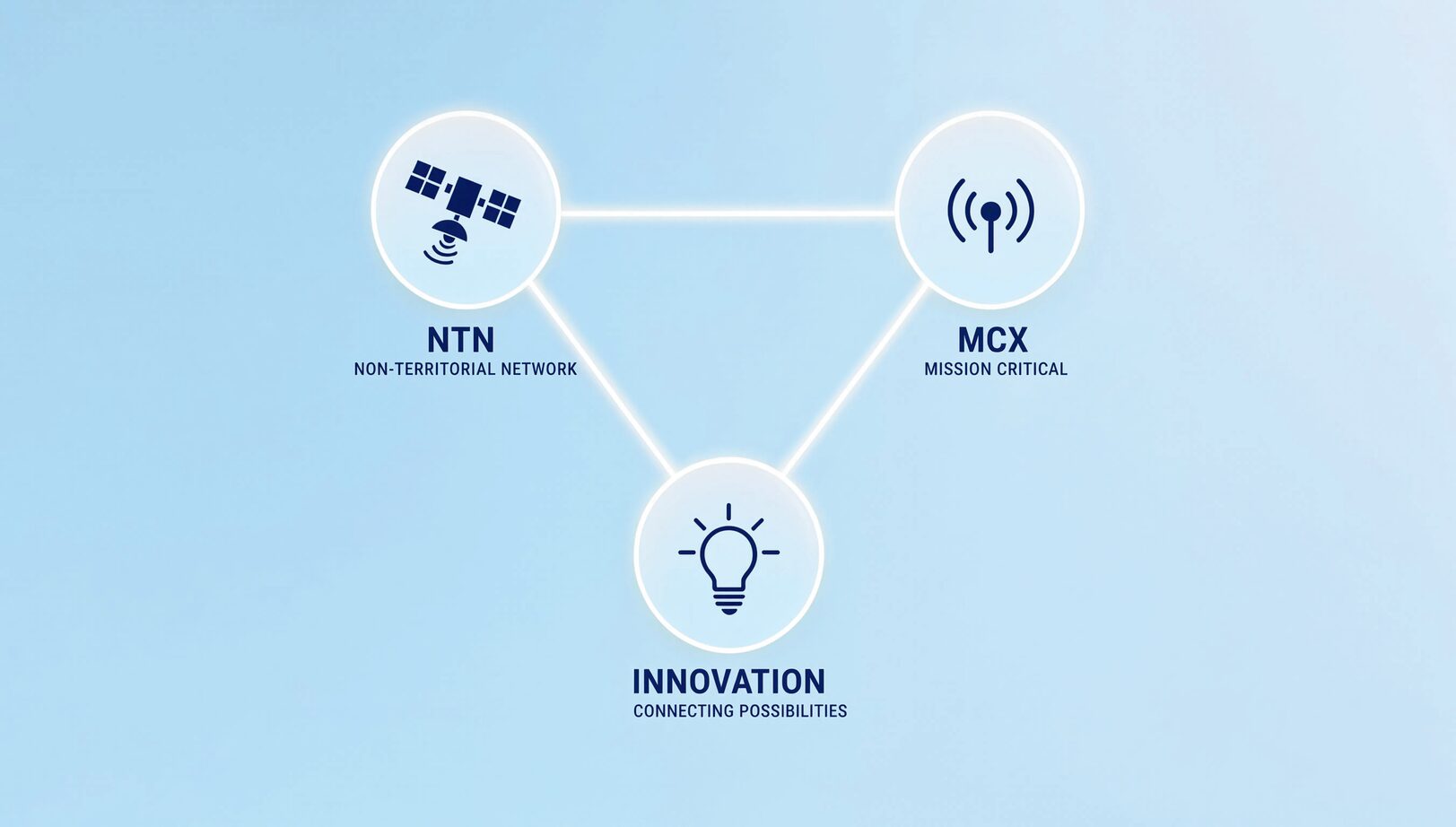
HYBRID-LINK MCX develops and validates a hybrid NTN/TN connectivity solution for seamless communications during climate disaster operations by introducing new Mission Critical Services (MCX) capabilities, including a predictive soft-handover mechanism and managing communications with application-aware traffic prioritization.
Objectives
• Validate MCX Continuity in day zero scenarios
• Develop robust packet-level bonding algorithms
• Intelligent RedCap routing logic
• Predictive soft-handover mechanism
• TRL-5/6 validation in ESA-supported infrastructures
The innovation of HYBRID-LINK MCX lies in the development of a specific Multi-Connectivity Controller that sits between the MXC application and the hybrid TN-NTN interface network.
Impact on Climate Resilience
HYBRID-LINK MCX positions NTN not merely as a sporadic backup, but as the ultimate resilience guarantor via active redundancy.
This approach embodies the “Space for Earth” initiative, demonstrating how bonding terrestrial data flows with satellite links ensures that climate adaptation strategies, like early warning systems, remain functional even when the physical environment is compromised.
From Lab to Market: Customers and Commercial Roadmap
This activity acts as the strategic catalyst for Nemergent to transition its portfolio from “Standard MCX” (dependent on healthy terrestrial networks) to “Climate-Adaptive MCX” (network-agnostic and resilient). The medium-term goal is to become the global reference for “Resilience-as-a-Service” in the Public Safety market.
This project fits perfectly into their roadmap by filling the technological gap of satellite-terrestrial handover, enabling the delivery of a solution that guarantees connectivity not just when the network works, but specifically when it collapses.