Basque aerospace ecosystem hosts the final stop of this year’s ESA Phi-Lab Spain Tour
The session on 26 November highlighted the Basque Country’s space ecosystem as a hub for innovation and collaboration. ESA Phi-Lab Spain showcased its commitment to advancing solutions supporting the challenge of climate resilience while sharing details about the forthcoming second cut-off date of its open call
Derio, 26 November 2025
The final stop of the ESA Phi-Lab Spain Tour took place today in Derio, co-organised by HEGAN, IEEC and TECNALIA and hosted at their facilities. The session brought together companies, startups and research groups for a day dedicated to space-driven innovation and climate resilience, marking the end of a month-long series of events across Spain.
The welcome was led by Ángel Doblado, Space and Defense Market Manager at TECNALIA, and Iñigo Lazkanotegi, Business Development Expert at TECNALIA. They highlighted that Euskadi is home to a “first-class technological ecosystem” and stressed that space has become a crucial driver of innovation.
“We are at a decisive moment. Building a more sustainable future requires effective, scalable and collaborative solutions” they noted.
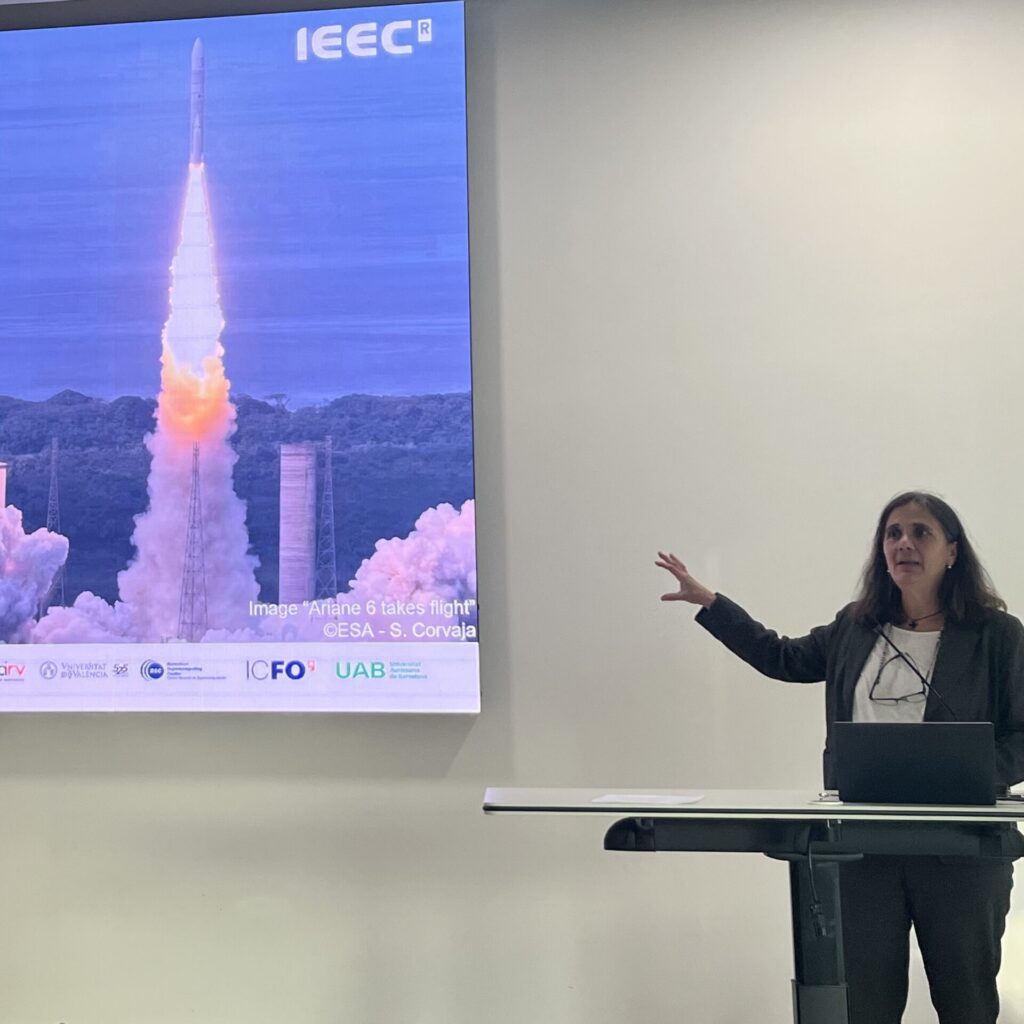
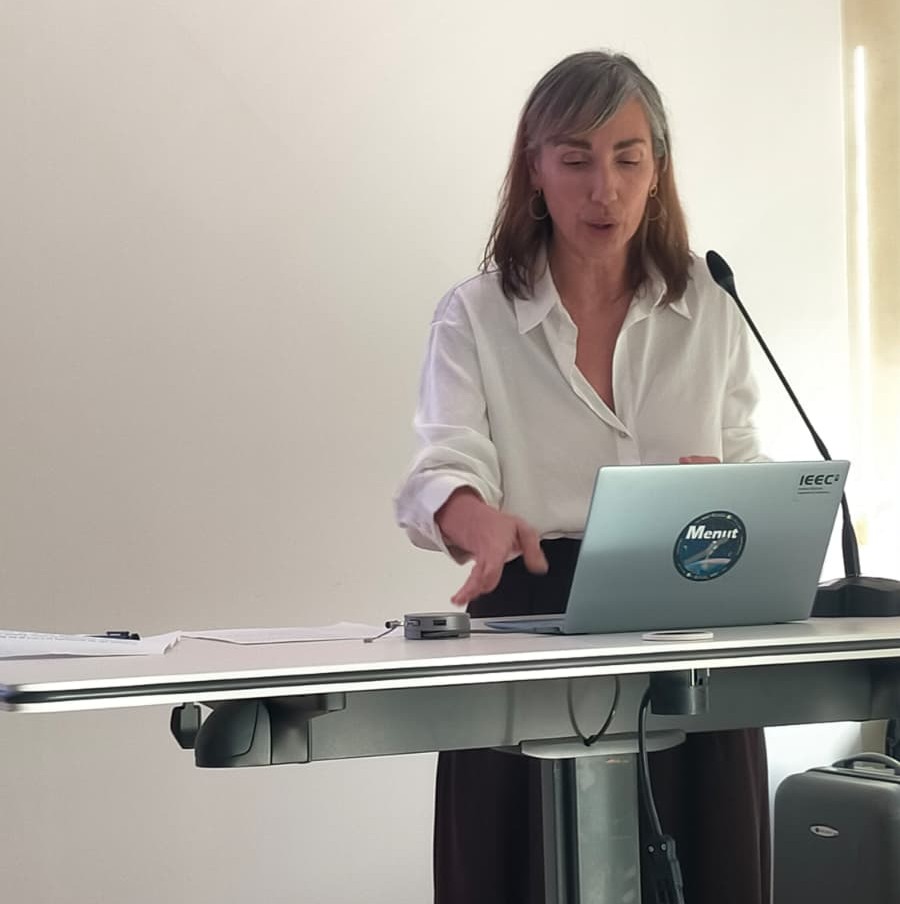
The programme presentation was delivered by Pepa Sedó, Head of the Development and Innovation Office at IEEC, who introduced ESA Phi-Lab Spain and stressed the strong capabilities of the Basque region. She encouraged local actors to bring forward proposals for the upcoming second cut-off date, reminding participants that Phi-Lab is not only a funding programme.
“We aim to incubate projects and accompany teams throughout their development, offering tools and services that support their growth.”
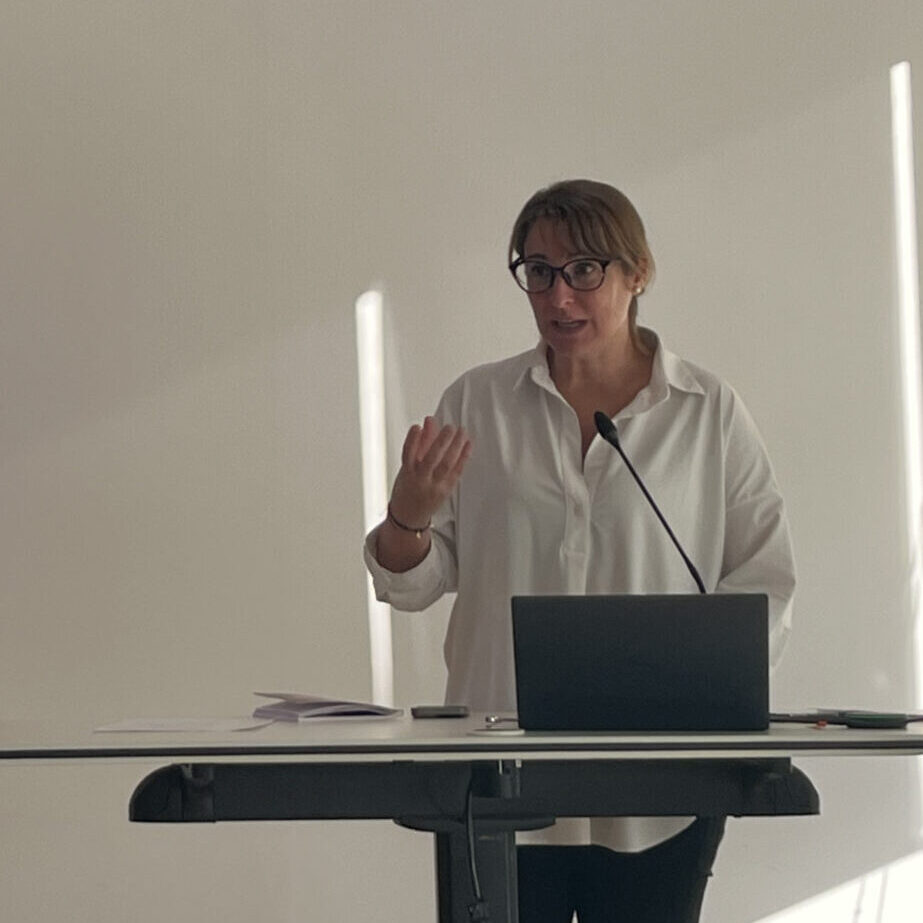
Pepa Sedó, Head of the Development and Innovation Office at IEECEstel Blay, Programme Manager at IEEC
Estel Blay, Programme Manager at IEEC, followed with a detailed overview of the ESA Phi-Lab Spain Open Call. She clarified the focus on climate resilience — a concept that can sometimes be misunderstood: it does not simply mean “green projects”, but solutions that reduce vulnerability, improve preparedness or strengthen adaptive capacity. She also highlighted the broad technological scope of the call: although the first four selected projects are downstream, “we strongly encourage upstream proposals as well.”
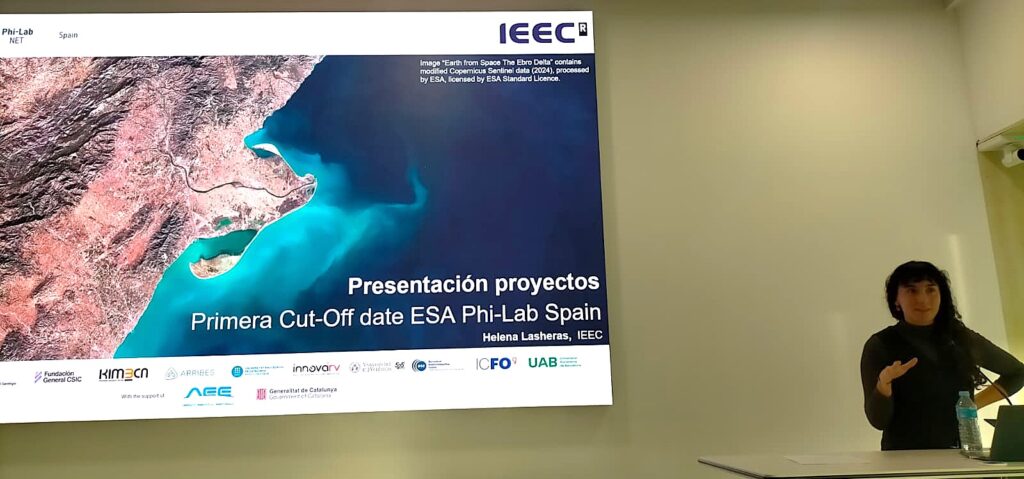
Helena Lasheras, Technical Manager at IEEC, then presented the four projects funded in the first cut-off date, showcasing them as examples of the type of innovative, space-based solutions that align with the programme’s objectives.
Helena Lasheras, Technical Manager at IEEC
Basque strengths in space technologies and climate adaptation
Returning to TECNALIA, Ángel Doblado, provided an overview of their work in the space industry, citing three major lines of activity: new technological solutions, strategic collaborations and emerging areas of expertise.
He was followed by Efrén Feliu Torres, Climate Change Adaptation Manager at TECNALIA, who shared insights into their work on urban heat dynamics. He underlined the importance of generating “transferable and scalable workflows and applications” when designing solutions for climate adaptation, a message fully aligned with the mission of ESA Phi-Lab Spain.
Representing HEGAN – Basque Aerospace Cluster, Ana Villate, Managing Director of HEGAN, presented the cluster’s strategic programmes, highlighting their role in driving cooperation within the sector. She noted that they work to create influence and foster joint actions that address the strategic challenges of their members, emphasising the importance of sustainable growth and collaborative development.
Ángel Doblado, Space and Defense Market Manager at TECNALIAAna Villate, Managing Director of HEGAN
Technology transfer and commercialisation opportunities
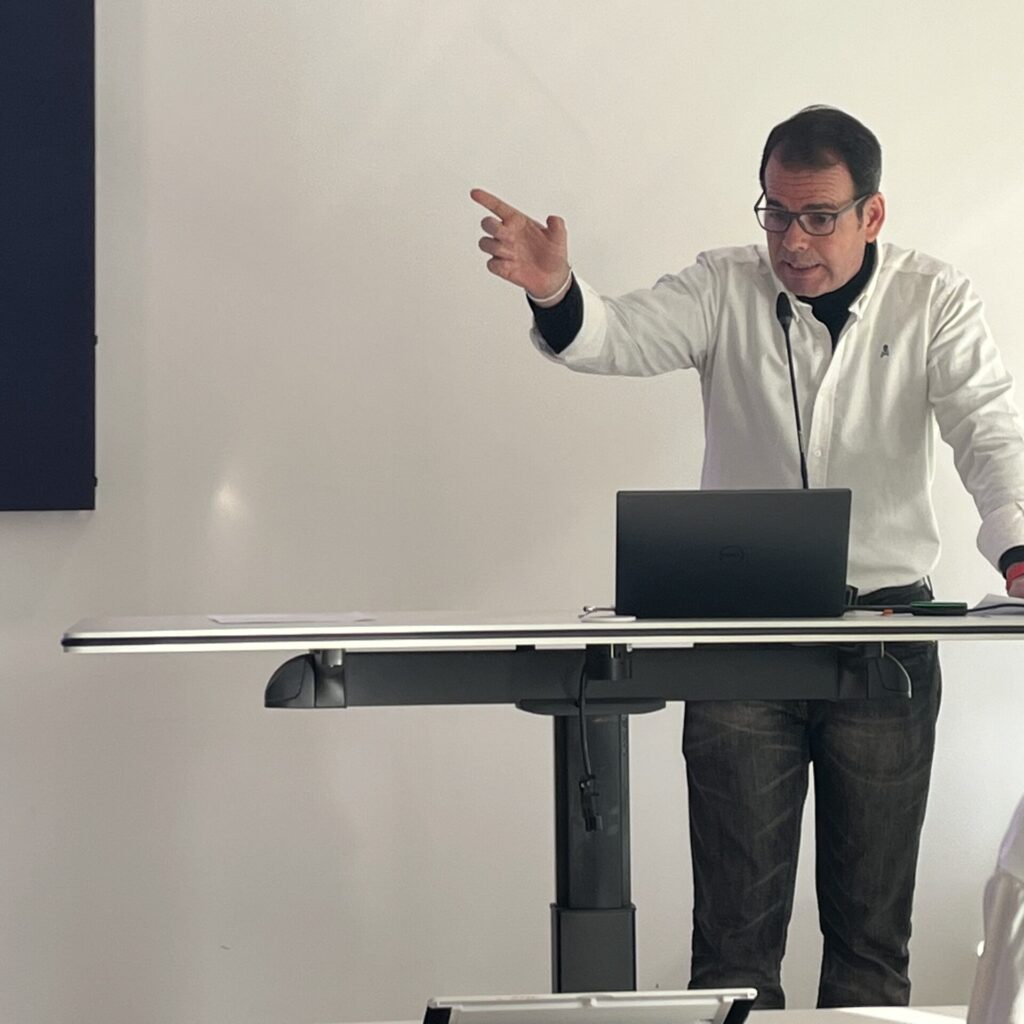
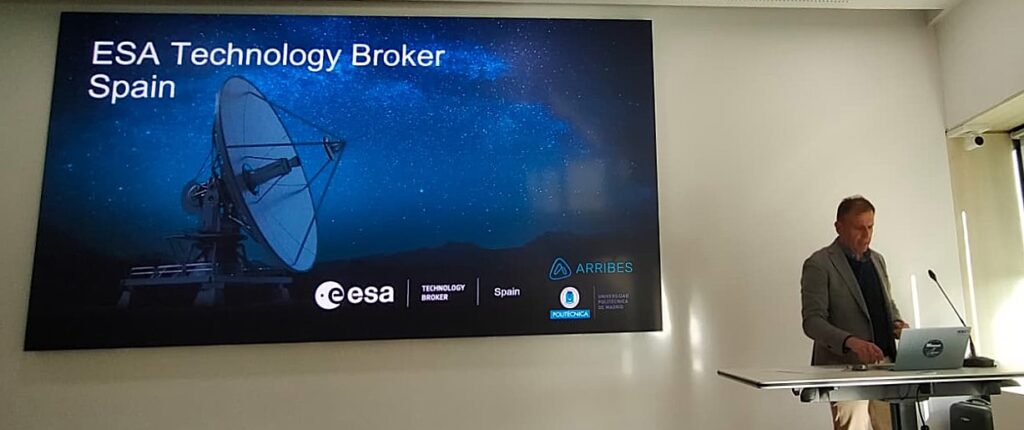
Closing the presentations, Manuel Laborda (ESA Technology Broker) introduced ESA’s Scale-up programme, of which Phi-Lab is part, and explained the key role of the broker as a connector between diverse stakeholders. He outlined the programme’s focus on technology transfer, commercialisation and cross-sector collaboration.
Manuel Laborda, ESA Technology Broker
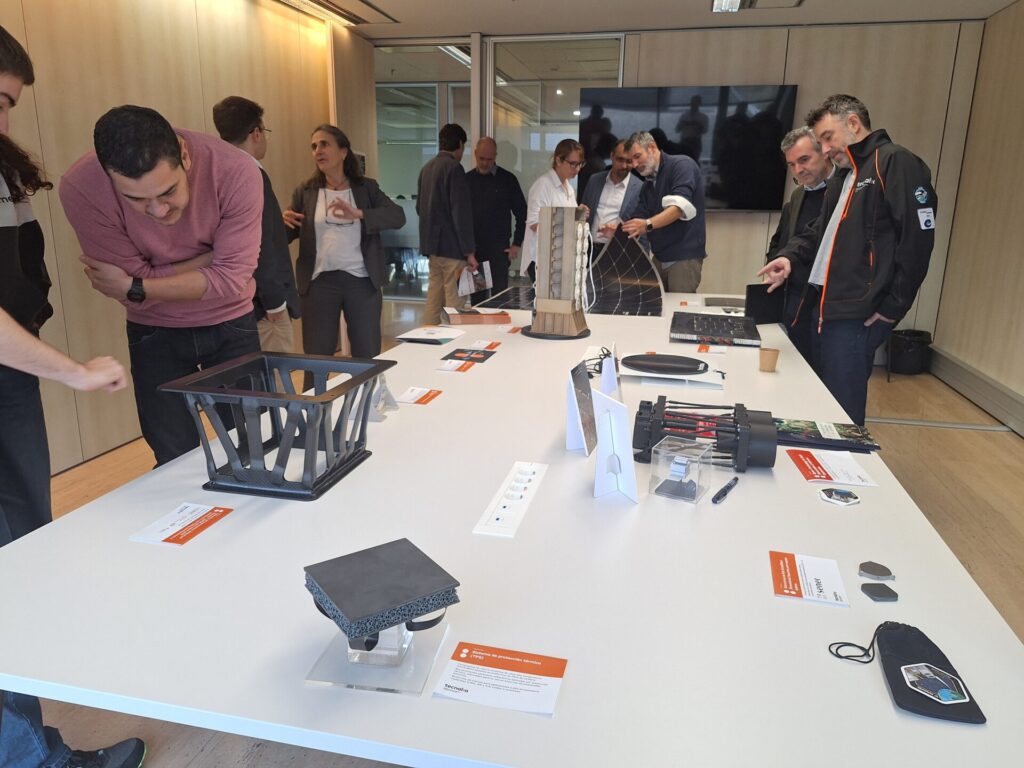
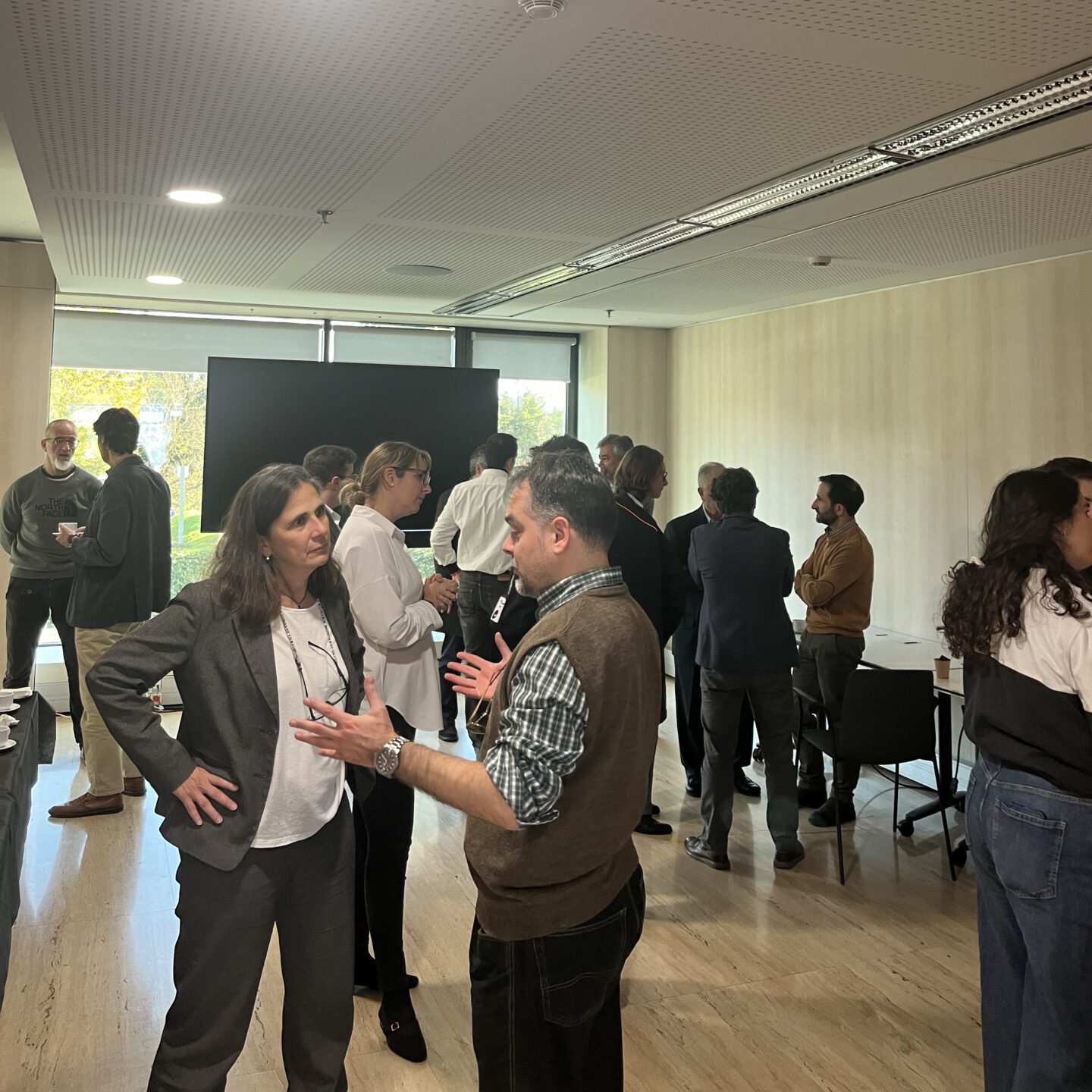
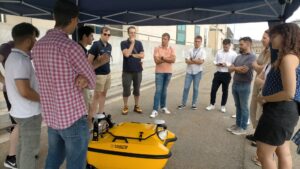
After the talks, participants engaged in a speed-dating session and networking coffee, followed by a visit to the demonstration area, where they explored ongoing developments and prototypes in the Basque space ecosystem.
To deliver the best experiences, we use technologies such as cookies to store and/or access device information. Consent to these technologies will allow us to process data such as browsing behavior or unique IDs on this site. Not consenting or withdrawing consent may negatively impact certain features and functionality.
Functional
Always active
Technical storage or access is strictly necessary for the legitimate purpose of allowing the use of a specific service explicitly requested by the subscriber or user, or for the sole purpose of carrying out the transmission of a communication over an electronic communications network.
Preferencias
El almacenamiento o acceso técnico es necesario para la finalidad legítima de almacenar preferencias no solicitadas por el abonado o usuario.
Statistics
Storage or technical access that is used exclusively for statistical purposes.El almacenamiento o acceso técnico que se utiliza exclusivamente con fines estadísticos anónimos. Sin un requerimiento, el cumplimiento voluntario por parte de tu proveedor de servicios de Internet, o los registros adicionales de un tercero, la información almacenada o recuperada sólo para este propósito no se puede utilizar para identificarte.
Marketing
El almacenamiento o acceso técnico es necesario para crear perfiles de usuario para enviar publicidad, o para rastrear al usuario en una web o en varias web con fines de marketing similares.