SKOP project scales up: harnessing World-Class Supercomputing for high-precision climate intelligence
The ESA Phi-lab Spain project, “SKOP: Beyond the Limits of Climate Intelligence,” is entering a new phase of massive computational power. By securing access to two of Europe’s most prominent High-Performance Computing (HPC) infrastructures, the project is set to redefine the predictive accuracy of the climate prediction for the energy sector.
Barcelona, 05/02/2026
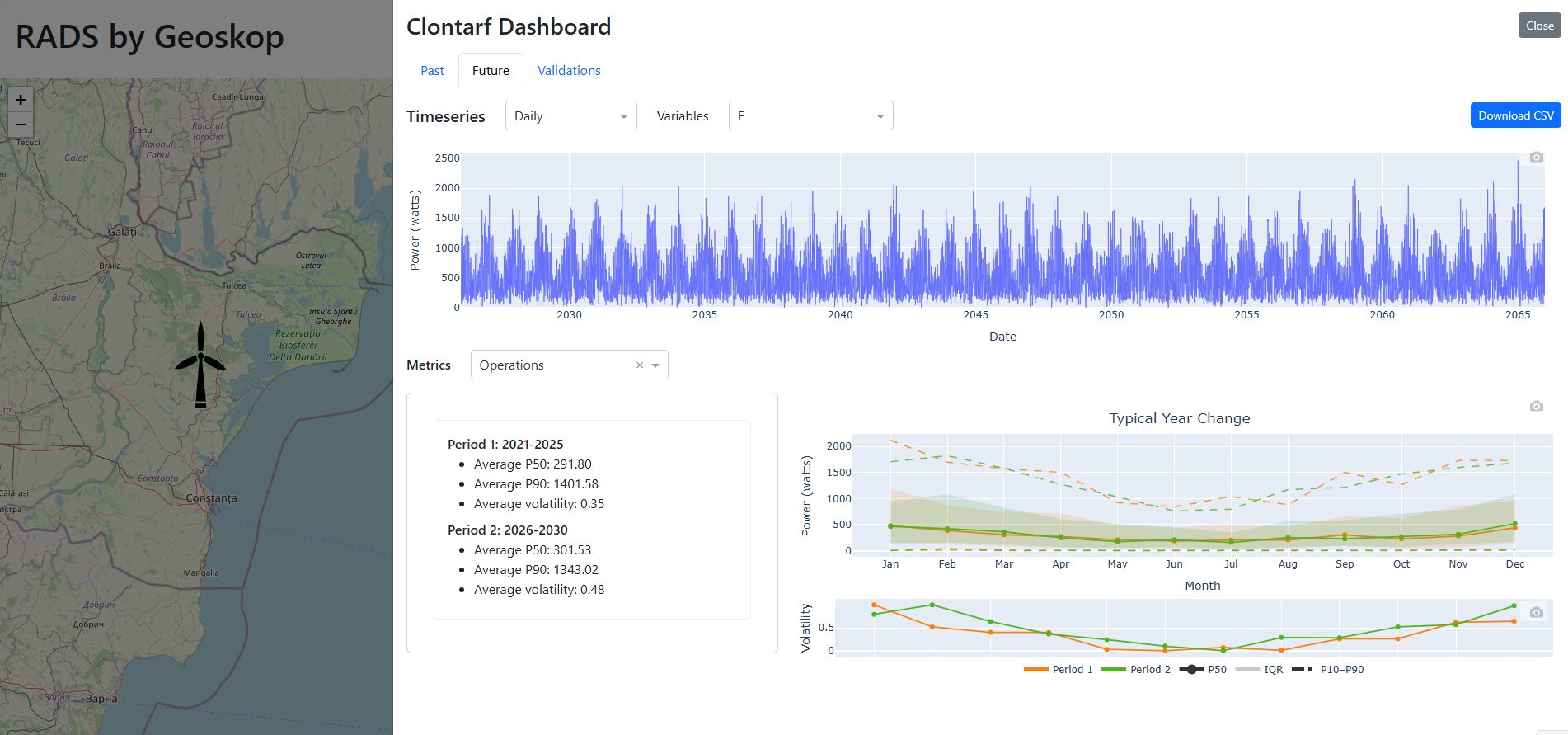
To bridge the critical gap between global climate models and local industrial needs, SKOP (Geoskop’s suite of proprietary algorithms) is now integrating its AI-driven workflows into a dual-supercomputing framework capable of handling global climate data at the petabyte scale.
A Dual-Powerhouse collaboration
The project’s expansion is driven by its integration into two world-class computing environments:
- Levante, the DKRZ’s high-performance supercomputer: Recognized as a core node for the IPCC (Intergovernmental Panel on Climate Change), DKRZ provides the most authoritative climate data globally. This collaboration, coordinated by the Fraunhofer Heinrich Hertz Institute (HHI), ensures that SKOP’s algorithms are built upon the highest standards of scientific verification.
- ENI HPC6: In a significant leap for AI training, SKOP has been selected to access the HPC6 supercomputer. Currently ranked No. 6 in the world (TOP500, June 2025), this infrastructure provides the computational muscle required to run exhaustive AI models, allowing SKOP to process vast datasets with unmatched speed and precision.
Driving the energy transition
The synergy between Earth Observation (EO) data, physical climate science, and world-leading supercomputing is what sets SKOP apart. By utilizing these HPC resources, the project can simulate complex climate variables with a level of granularity previously unavailable to the energy market.
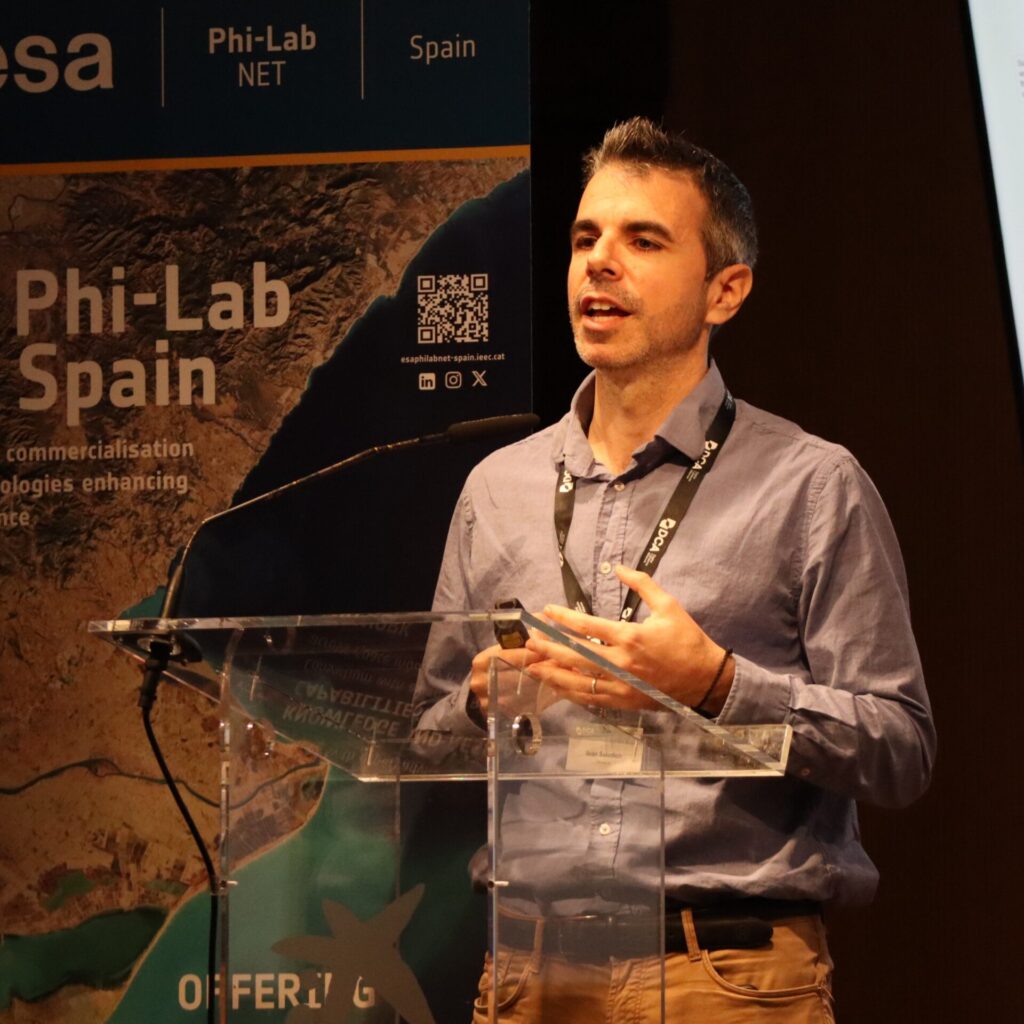
“Thanks to the trust of all the stakeholders involved (ESA, IEEC, ENI, Fraunhofer HHI, and DKRZ) we are pushing the boundaries of applied climate science. We know that today’s static standards cannot deliver a realistic valuation of renewable assets. SKOP bridges that gap with next-generation algorithms that make energy projects not just climate-resilient, but financially robust”
– Joan Saladich, project leader.
The ultimate goal is to provide renewable energy developers with the certainty needed to de-risk large-scale investments, ensuring that the transition to a resilient economy is backed by the best possible science.
About ESA Phi-Lab Spain
ESA Phi-Lab Spain is a programme of the European Space Agency (ESA), supported by the Spanish Space Agency (AEE) and the Generalitat de Catalunya. The programme is part of ESA’s ScaleUp Programme, with a focus on promoting innovation and the commercialisation of space technologies to enhance climate resilience.
The programme is coordinated by the Institut d’Estudis Espacials de Catalunya (IEEC), which leads a consortium of twelve universities, research and innovation centres, and companies. These include the i2CAT Foundation, the Cartographic and Geological Institute of Catalonia (ICGC), the Fundación General CSIC, the KIMbcn Foundation, Arribes Enlightenment, the University of Valencia (UVEG), the Polytechnic University of Catalonia (UPC), the Barcelona Supercomputing Center (BSC-CNS), the Ricardo Valle Institute of Innovation Foundation (INNOVA IRV), the ESA MELiSSA Pilot Plant of the Universitat Autònoma de Barcelona (UAB), and the Institute of Photonic Sciences (ICFO).


ESA Phi-Lab Spain: first call for project financing