INTERVIEW | SKOP: «A 1% deviation in a wind farm can mean tens of millions of euros, we can’t rely only on history.»
The ESA Phi-Lab Spain team interviewed the head of the SKOP project: Joan Saladich, CEO and founder of GEOSKOP.
SKOP, one of the ESA Phi-Lab Spain projects, is Geoskop’s set of proprietary algorithms that generate accurate climate predictions anywhere on the planet. This system is key for the energy sector, as it allows utilities, operators, energy investors and public entities to benefit from effective climate adaptation and build greater resilience to climate change. It is an initiative led by Geoskop in collaboration with Centre Internacional de Mètodes Numèrics en Enginyeria (CIMNE).
Barcelona, December 2025
1. To begin with, what is SKOP and what is the main need it seeks to cover in a world affected by climate change?
SKOP is the scientific and technological core of Geoskop, consisting of a set of proprietary algorithms that interact with each other, process and improve climate change models.
The main need that SKOP seeks to fill is the critical lack of climate predictions. That is, very long-term, accurate and useful predictions necessary for effective adaptation and resilience to climate change. In a world affected by global warming, past climate is no longer a reliable reference for the future.
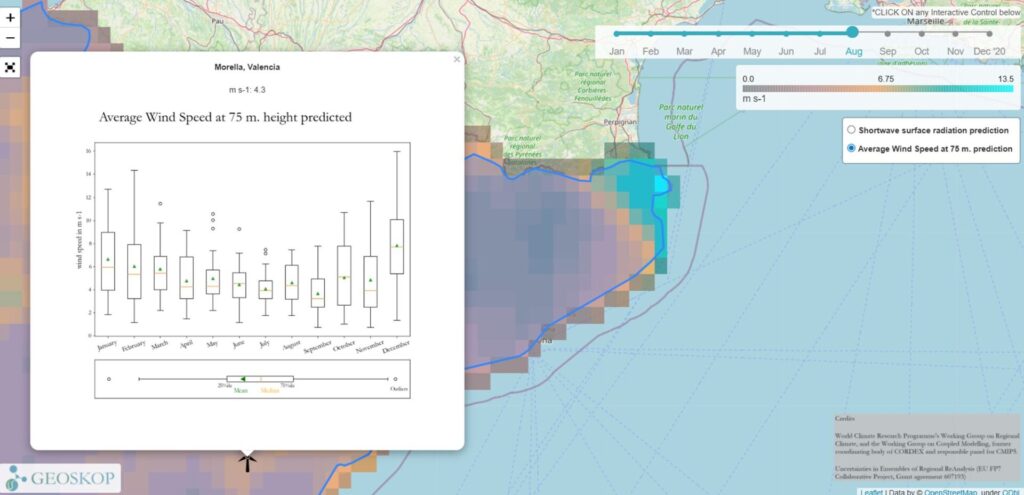
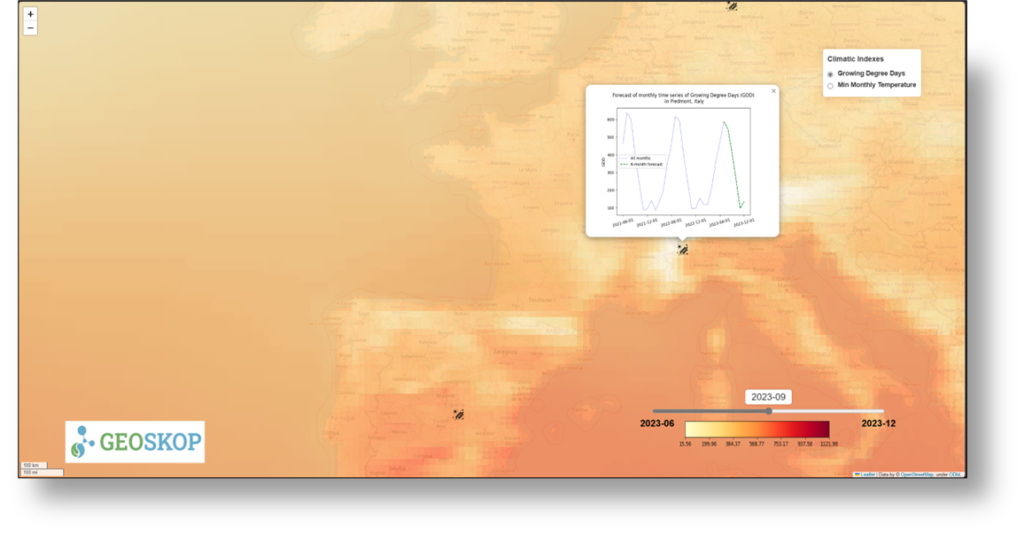
The industry needs to know what the climate will be like in the coming years and decades to make sound investments and strategic plans. But unfortunately, we have seen that current climate models are not designed for this very local need in company decision-making, which leaves a significant gap that SKOP aims to fill.
2. Many decisions in the energy sector continue to be based on historical data, despite climate patterns changing rapidly. Why is it a problem to rely solely on this approach and what consequences might it have?
Relying solely on historical observations is a significant problem, which has both social and economic impacts.
For example, in the renewable energy sector, a deviation of just 1% in the budgeted energy production of a wind farm results in losses of tens of millions of euros over the asset’s lifetime. With our experience in the sector, we have seen that the generation variability of a wind farm is approximately ±4% over twenty-year periods compared with the historical record.
This represents a massive amount of financial uncertainty for investments and can lead to poor planning of the investment portfolio and even grid instability.
3. SKOP combines satellite observations, climate models and artificial intelligence algorithms. What does this fusion of technologies bring and how does it differ from current prediction methods?
The difference is the fusion of different technologies. By combining satellite observations, climate models, and deep learning algorithms, we achieve something that current methods often do not: predictive effectiveness. Satellites provide real-world representation. Climate models provide the fundamental physics of atmospheric circulation. Artificial Intelligence learns complex patterns to improve predictive accuracy and automate the process.
This combination allows us to go beyond simple model improvements to consistently generate predictions that are more accurate than simply using historical data, making them truly useful for critical business decisions.
4. The project aims to improve the planning and profitability of wind and solar farms, among others. What concrete benefits could your technology have for energy companies and, ultimately, for the transition to renewable energy?
The benefits for energy companies are directly linked to the reduction of financial and economic risks in the energy transition. For long-term planning and new investments, our technology provides more accurate resource assessments (whether solar or wind).
For example, in the assessment of new wind farms, we have reduced resource uncertainties from 3.8% to 1.5%, validated by our client, potentially optimizing investment and decision-making by more than 26 million euros.
At a national level, our technology helps determine optimal locations for bidding for large-scale wind farms and solar farms, enhancing the energy transition and helping to generate a greater amount of clean energy at a lower cost to society.
5. SKOP is led by Geoskop alongside CIMNE, and you also have partners and customers from the energy sector who validate your technology. How do these collaborations complement each other and what role do they play in ensuring the success of the project?
Our partnerships are fundamental to our success. We work with CIMNE because of their deep expertise in computational mechanics and satellite data, which ensures the scientific soundness of our progress.
At the same time, our collaborations with customers in the renewables sector are vital for real-world validation tests. They provide the practical use cases and feedback that ensure that the technology we develop is not only scientifically advanced, but also commercially viable and truly solves the pressing problems facing the industry. In short, we have the ideal partners to take on this scientific challenge.
6. Although the energy sector is your starting point, do you imagine that SKOP technology could also be applied in other areas, such as agriculture or water management?
Our vision at Geoskop is clear: we are focused on the energy sector and there is still a lot of work to be done. We firmly believe that if we really want to help society adapt to climate change, we must continue to focus and refine our technology in this area, which is where we can generate a more immediate and, above all, deeper impact.
However, the development of these precise and scalable algorithms for SKOP does open an important door for the future. This same new technology will be able to power Sustax, our climate change platform with global reach. The goal of Sustax is precisely to democratize this climate intelligence and help society as a whole, including potential other sectors, to adapt to climate change effectively and based on solid data.
However, our path lies, without a doubt, in consolidating ourselves first in the renewable energy sector.

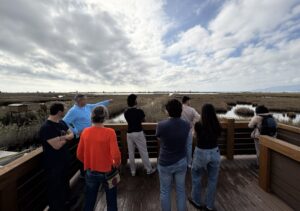
RESCAT: Visita de camp i reunió amb els actors al Delta de l’Ebre